
As Above, So Below
after Widline Cadet, Sé Sou Ou Mwen Mété Espwa m #1
(I Put All My Hopes On You #1)
Adam Gianforcaro
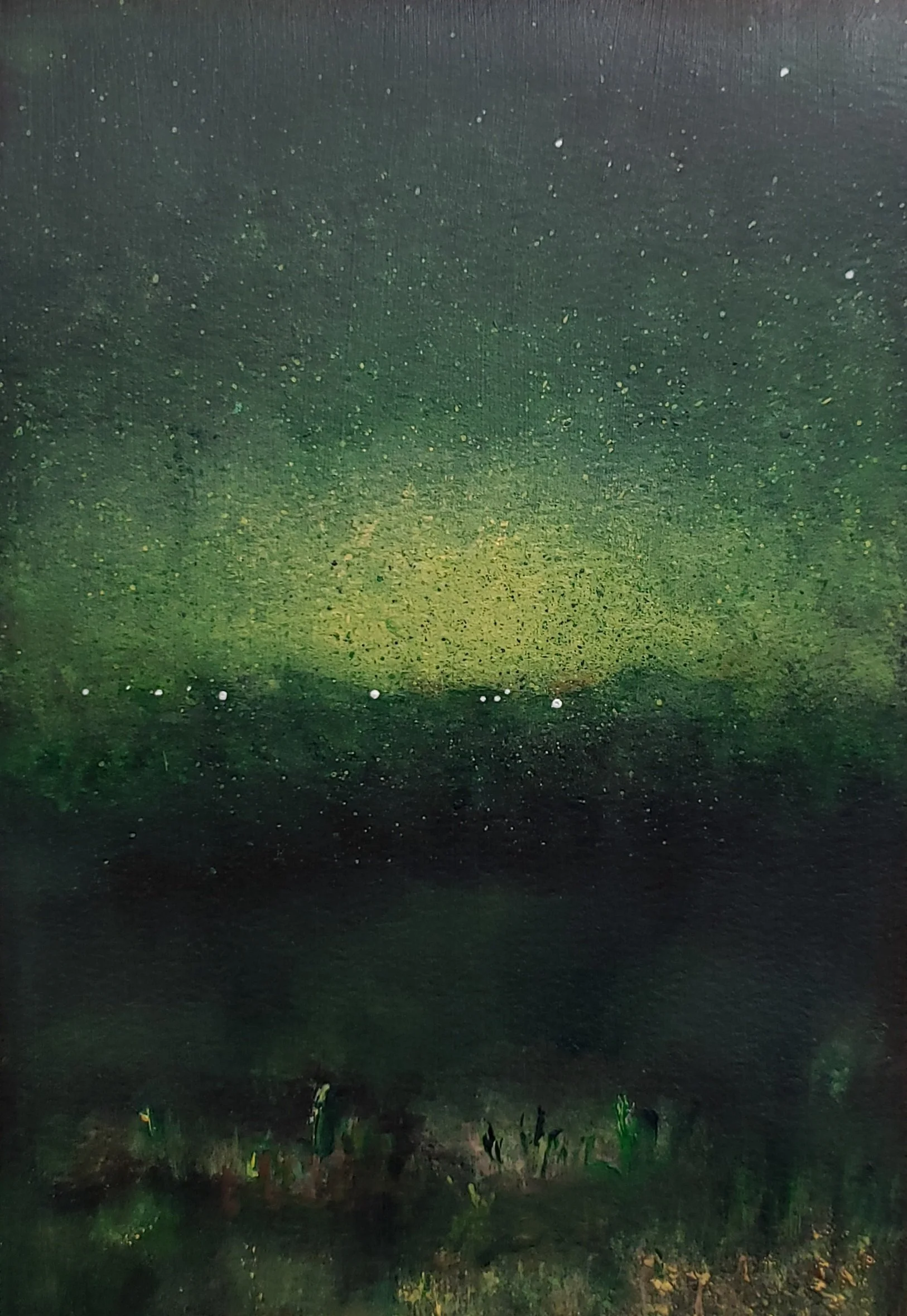
Empty Noise
Thad DeVassie
When I think about the ground, I think about movement:
the countless graves we walk upon and build upon
and force life into. I could never be a gardener
for the same reason I will never be a parent: growth
is too confusing. That things continue to change
despite a world of physical and mathematical constants:
a sequoia once a seed stuck in a bear’s teeth,
or a six-hundred-pound octopus squeezing through
a coin-sized tube. How? Weird too that the ground
is everywhere. We bury our dead in the dirt
or toss them into the sea. For what it’s worth,
ground will meet us underwater as well. Shadows
draw upon the lowly parts as if they were the artist
and not whichever light source was kind enough
to share its labor. I wonder how much of art is luminosity
and how much of it is fear. Life too:
a patch in the astral flowerbed
where apprehension blooms beacon-bright.
The other day, on the way to the museum,
Jo was telling me how much she fears
her mother’s death, the inevitable event waiting for her
in the inevitable future. That it could walk up on her
at any moment. I say she’s not alone in this
but that’s not what she wanted to hear. It makes it worse
somehow. And then I tell her there are two ways
of looking at time: that we are fixed points
and time moves through us, or that time is a fixed point
and we are the ones in motion. In both scenarios
the ground will still bloat its belly with overeating,
so really, it was a pointless thing to say. Again,
it makes things worse. When we get to the museum, I am
most interested in the locked doors of its depository,
the art behind them, the potential to discover
dark rooms backlit by the brightest canvases. I want
to mention windows here as a way to bring in more light
but there are two in this poem already. One stares blankly
into the room like a taxidermied terrier and the other window
barely looks like a window. It is a photo of your mother,
my mother, our collective maker. She is young and she is happy
and there’s a ladder in the background of the picture
that looks like it could be to a bunk bed, but it may very well reach
the moon. It’s hard to tell: the photo frame cuts off the top
of the image. For all we know this is another tool for transition.
When the time comes, a way to reach sea level.
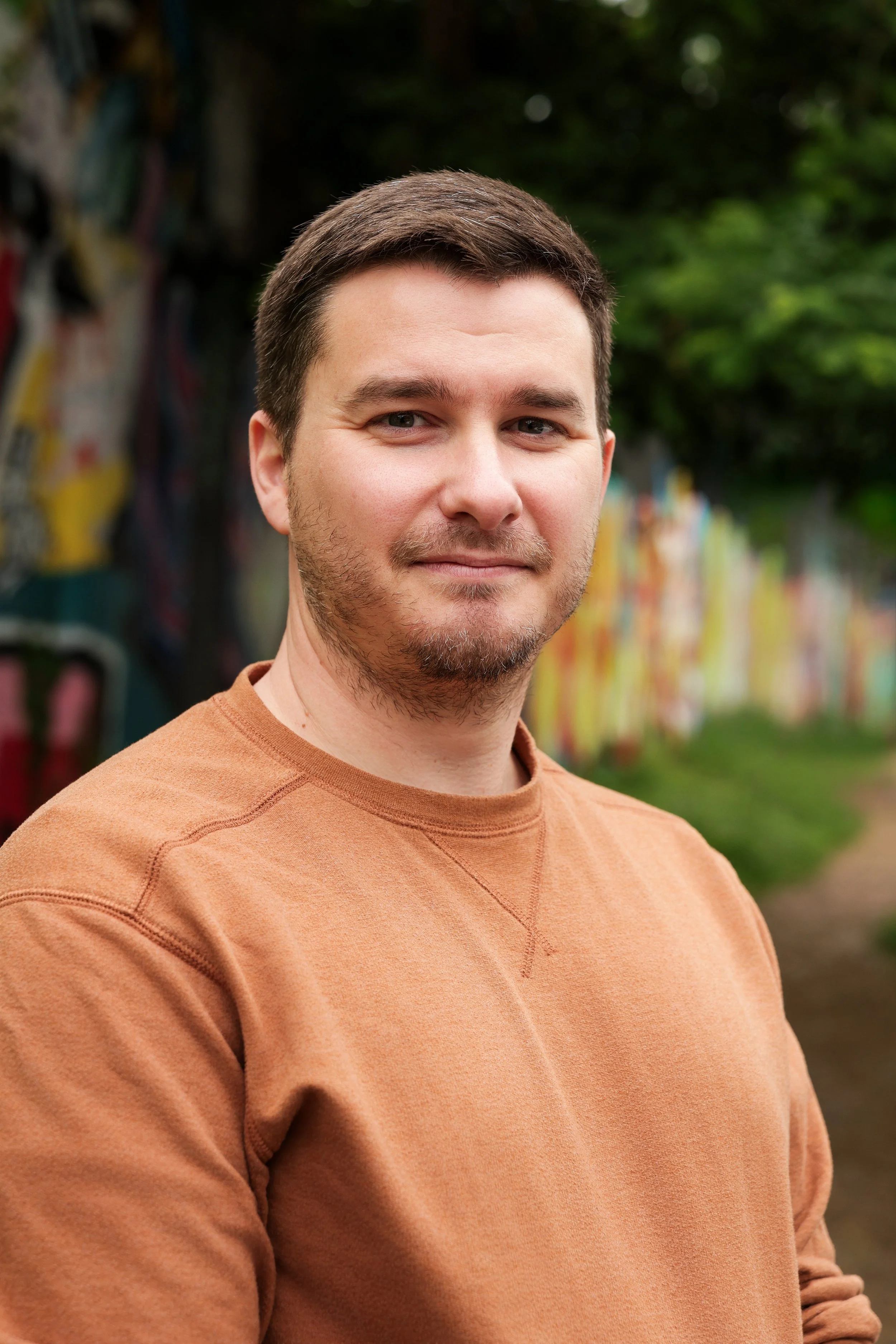
Adam Gianforcaro is the author of the chapbook Poems to Stage Dive to (Stanchion Books, 2026) and full-length collection Every Living Day (Thirty West, 2023). A Pushcart Prize and Best of the Net nominee, his work can be found in The Offing, The Harvard Advocate, Ninth Letter, and elsewhere. Find Adam on Instagram and BlueSky.
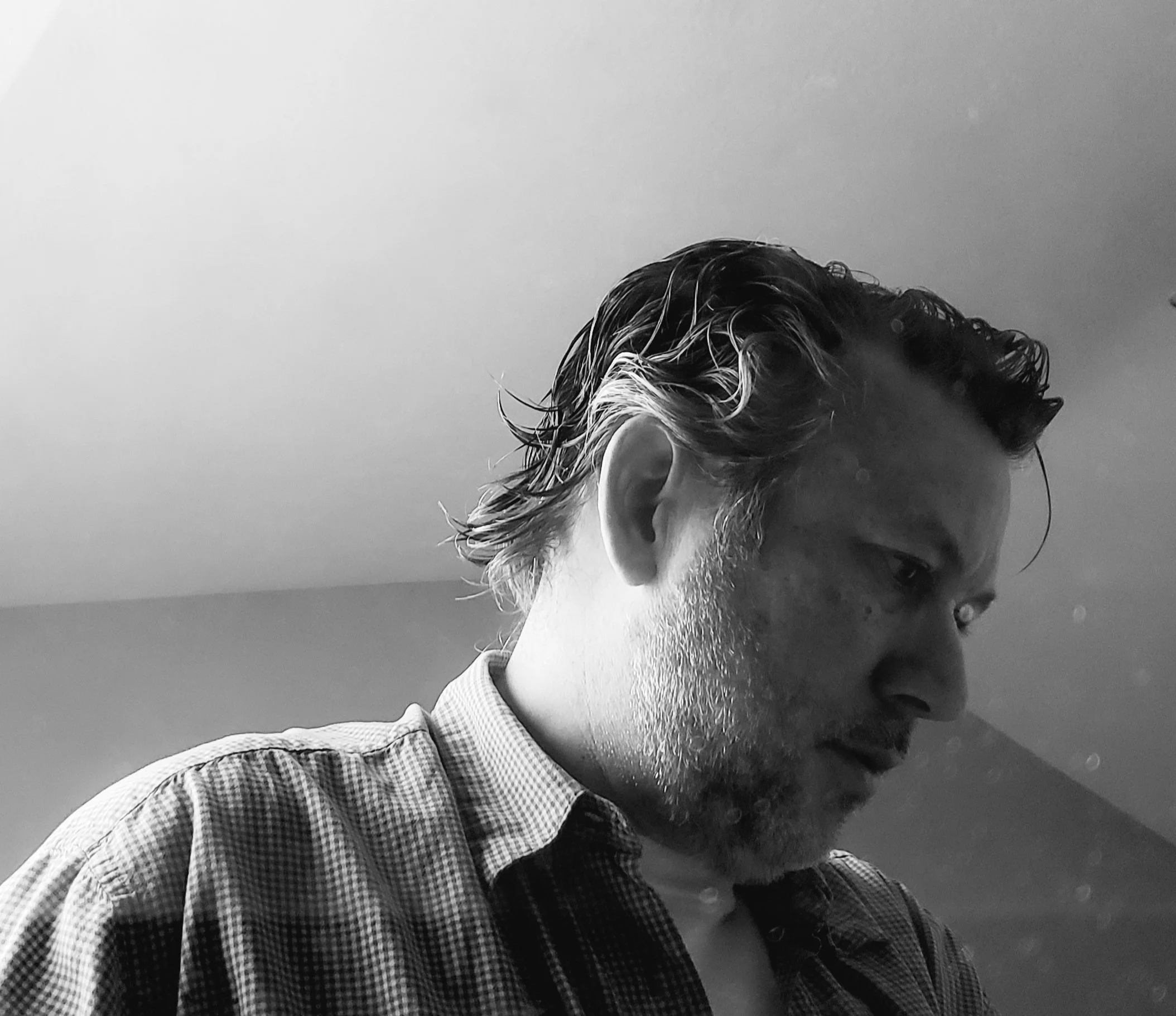
Thad DeVassie is a writer and artist/painter from Ohio. He is the author three chapbooks and was awarded the James Tate Poetry Prize (SurVision Books). His work has been nominated for the Pushcart Prize, Best of the Net, Best Microfiction, and appears in Best Small Fictions 2025. His artwork has appeared in galleries, private collections, and more recently in literary journals including Salt Hill, Phoebe, Bat City Review, The Dodge, and New Ohio Review. Find more of his creative output at www.thaddevassie.com.